
Ear
Recurrent ear infections: when are ventilation tubes needed?
Most childhood ear infections resolve with medical treatment and with growth. Ventilation tubes come in when infections keep recurring despite treatment, or when fluid stays trapped behind the eardrum for months and reduces hearing. The operation is quick, done through the ear canal, and the most common tube comes out on its own after six months to a year.
Written by Profa. Dra. Aline Bittencourt, CRM-MA 7562 Medically reviewed by Profa. Dra. Aline Bittencourt, CRM-MA 7562 Published on
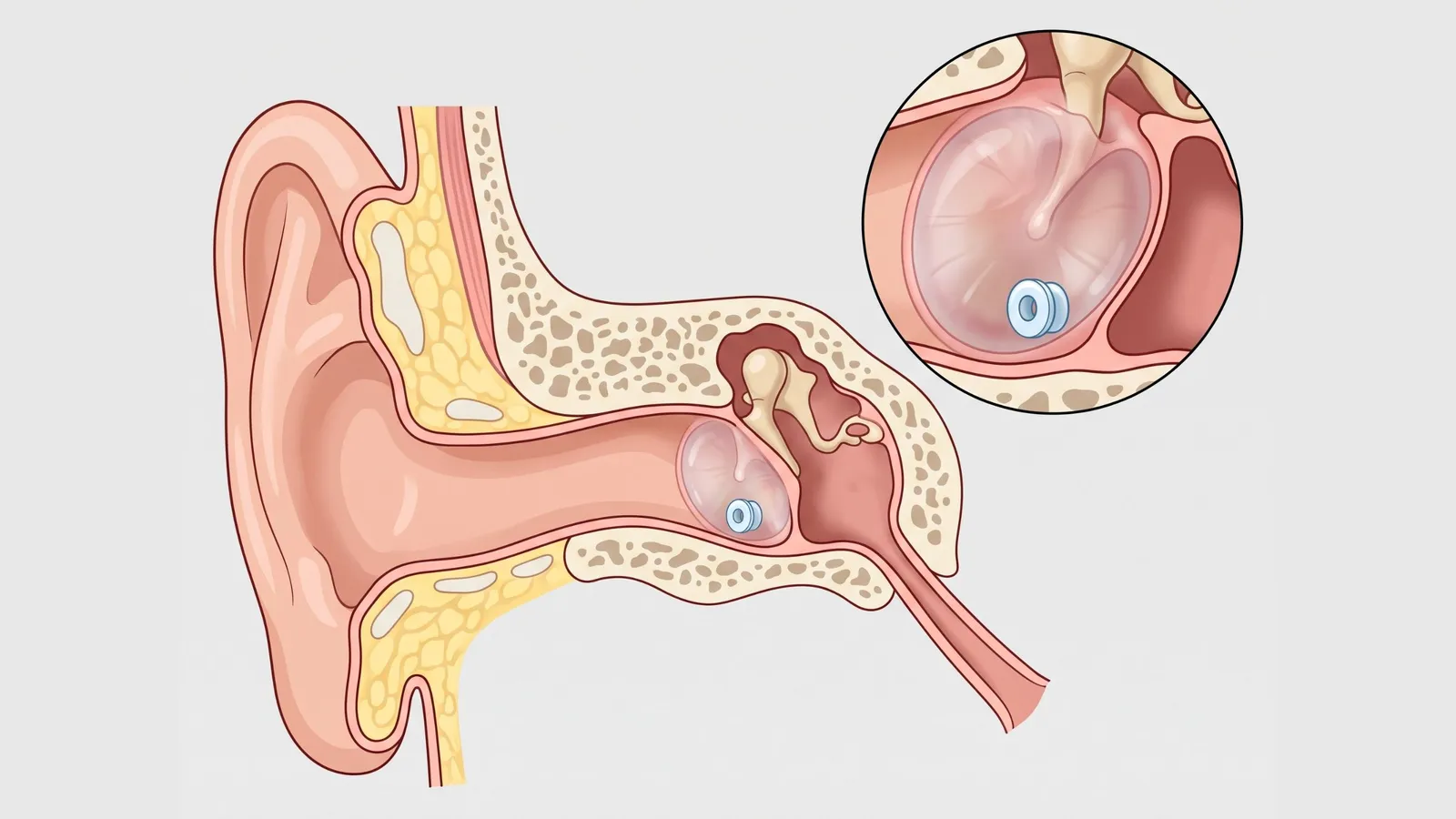
For many families the routine is familiar: fever, earache, antibiotics, improvement — and a few weeks later, the same again. At some point the question of “grommets” comes up. What do they do? When are they worth it?
Ventilation tube placement is one of the most common operations in children, and it can also be indicated in adults. The technical name is tympanotomy: a small opening in the eardrum through which the tube is placed.
Why do some children have so many ear infections?
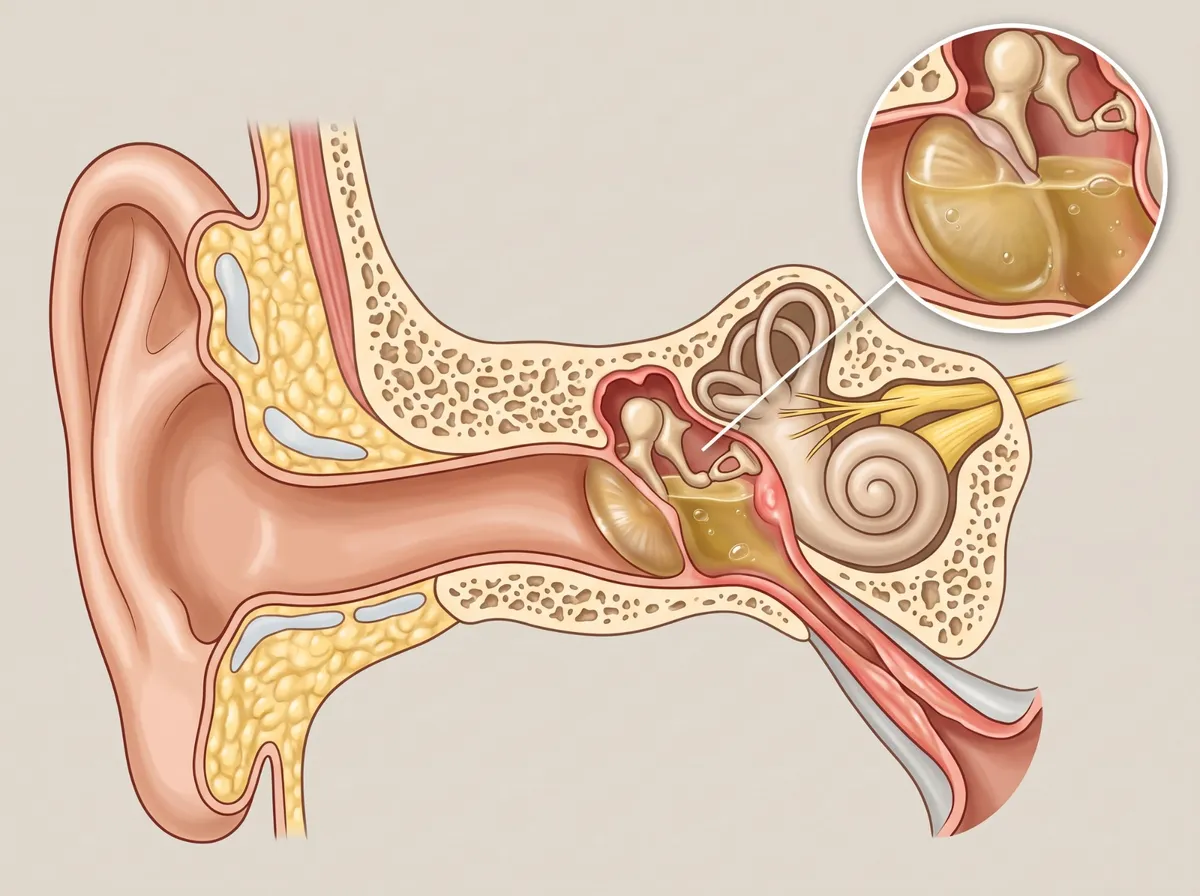
The middle ear, the space behind the eardrum, should be full of air. It is ventilated by a thin channel that connects it to the back of the nose: the Eustachian tube. In young children this channel is shorter, more horizontal and works less well. Colds, enlarged adenoids, rhinitis and nursery, with frequent exposure to viruses, complete the picture.
When the Eustachian tube does not ventilate well, fluid builds up behind the eardrum. Sometimes it becomes infected and turns into an acute ear infection, with pain and fever. Other times it simply stays there, with no pain at all — this is called otitis media with effusion, or glue ear. Even without pain, this fluid can reduce hearing and make the ear feel full.
What is a ventilation tube?
Ventilation tubes, also called grommets, are very small tubes, about 1 to 2 millimetres long, placed in the eardrum to:
- Let the fluid drain from the middle ear.
- Let air in to the middle ear, doing the job of the Eustachian tube while it is not working well.
- Improve hearing, when the hearing loss is caused by the fluid.
A tube is a temporary treatment: it gives the Eustachian tube time to mature or recover.
What types of tube are there?
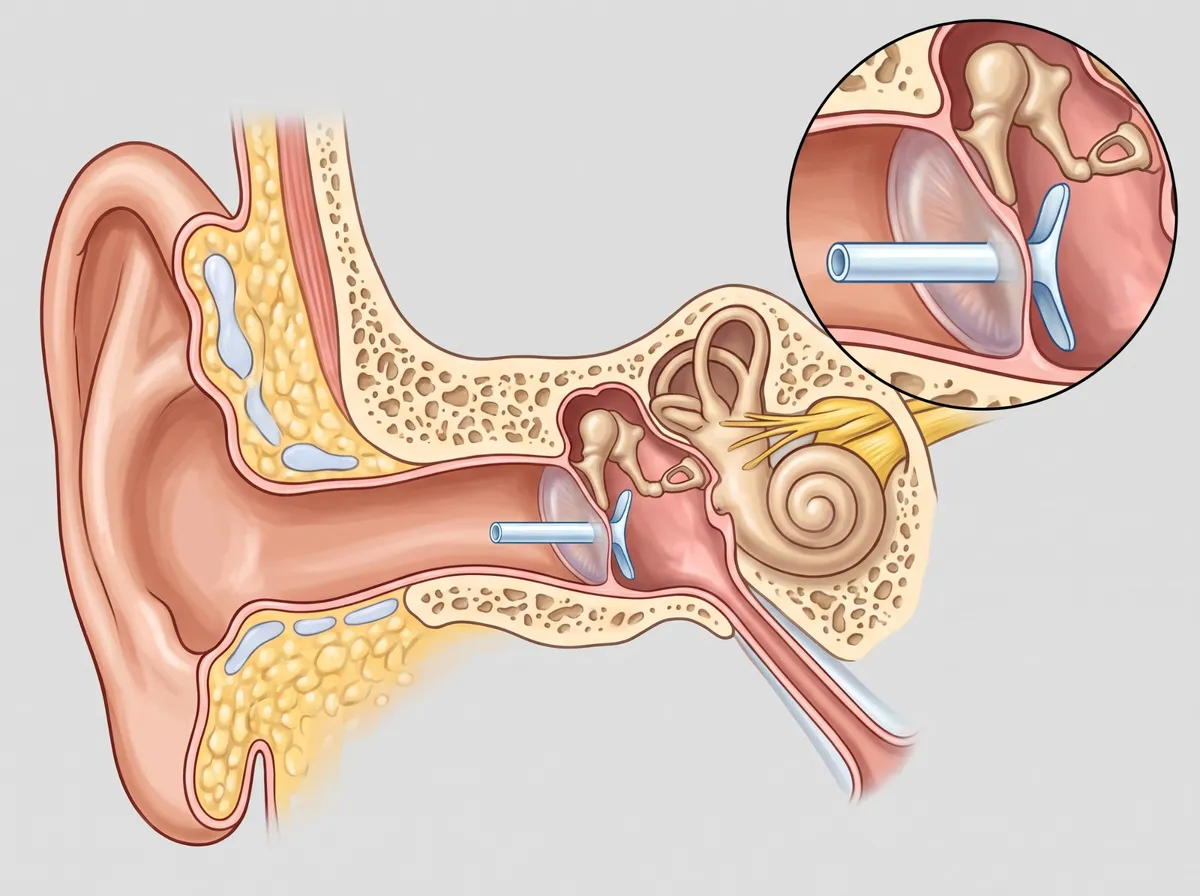
- Short-term tube (grommet). The most widely used. It sits in the eardrum and usually comes out on its own, painlessly, after six months to a year. Often nobody notices when it comes out.
- Long-term tube (T-tube). Used when the problem returns after previous tubes, or when the Eustachian tube is expected to take a long time to work well, as in some syndromes and in cleft palate. It can stay for years and usually needs to be removed by the doctor.
When is the operation indicated?
The decision is individual, but the most common situations are:
- Fluid behind the eardrum for a long time: otitis media with effusion that persists for more than three months and reduces hearing.
- Recurrent ear infections: several acute ear infections within a few months, despite appropriate treatment. As a rule, infections are called recurrent from three episodes in six months, or four in a year.
- Eardrum retraction: when the eardrum is pulled inwards by the lack of air in the middle ear.
- Speech delay or difficulty at school related to hearing loss caused by the fluid.
Before deciding, it is common to treat the nose and follow the child for a few weeks: much of this fluid clears on its own during that time. Assessment includes audiometry, which measures how well the child or adult hears (done through play in young children), and tympanometry, which shows whether there is fluid behind the eardrum. Because the fluid is often linked to enlarged adenoids, their size is sometimes also assessed, with nasal endoscopy or an X-ray.
What is the operation like?
It is done in hospital, in an operating theatre. Usually local anaesthesia with sedation is used; in some cases, general anaesthesia, as assessed by the anaesthetist. It is a quick procedure, usually lasting 15 to 30 minutes:
- Access through the ear canal, with an endoscope or microscope. There are no cuts in the skin.
- A small opening in the eardrum, the tympanotomy.
- Suction of the fluid from the middle ear.
- Placement of the tube, which sits in the opening without stitches.
When enlarged adenoids contribute to the problem, adenoid removal can be done in the same operation. Patients usually go home the same day.
What is recovery like?
- Quick recovery. School and work can usually be resumed the next day. Pain is usually mild.
- A little blood-stained discharge from the ear may occur in the first days.
- Sounds seeming louder in the first weeks is common, until the brain gets used to better hearing.
- Protection from water while the tube is in the eardrum. In the shower, cotton wool with oil at the ear opening and a shower cap; pool and sea only with a custom-moulded earplug. Diving is not allowed.
- Yellowish or foul-smelling discharge should be reported to the doctor. It is usually treated with ear drops.
- Check-ups every three months until the tube comes out, and one more visit afterwards to confirm that the eardrum has closed and hearing is good.
What are the risks?
It is a simple operation but, like any procedure, it has risks. The most common are fluid returning after the tube comes out, which may require a new tube; blockage of the tube; and the tube coming out earlier or later than expected. More rarely, the eardrum may not close after the tube comes out, which may require another operation, or small whitish scars may form, which usually do not affect hearing. Serious infections are very rare. These points are discussed in detail before any decision.
Are tubes always necessary?
No. Most children with ear infections improve with medical treatment, rhinitis control and growth itself. Tubes are a tool for when that path is not enough and hearing or the eardrum start to be affected.
If your child has ear infections that never seem to stop, an assessment with a paediatric ENT helps clarify which of these situations applies.