
Ear
Earwax: why cotton buds make things worse
Earwax is not dirt: it protects the ear canal, and the ear has its own way of clearing it. A cotton bud interrupts that mechanism and pushes inwards what would have come out on its own.
Written by Profa. Dra. Aline Bittencourt, CRM-MA 7562 Medically reviewed by Profa. Dra. Aline Bittencourt, CRM-MA 7562 Published on
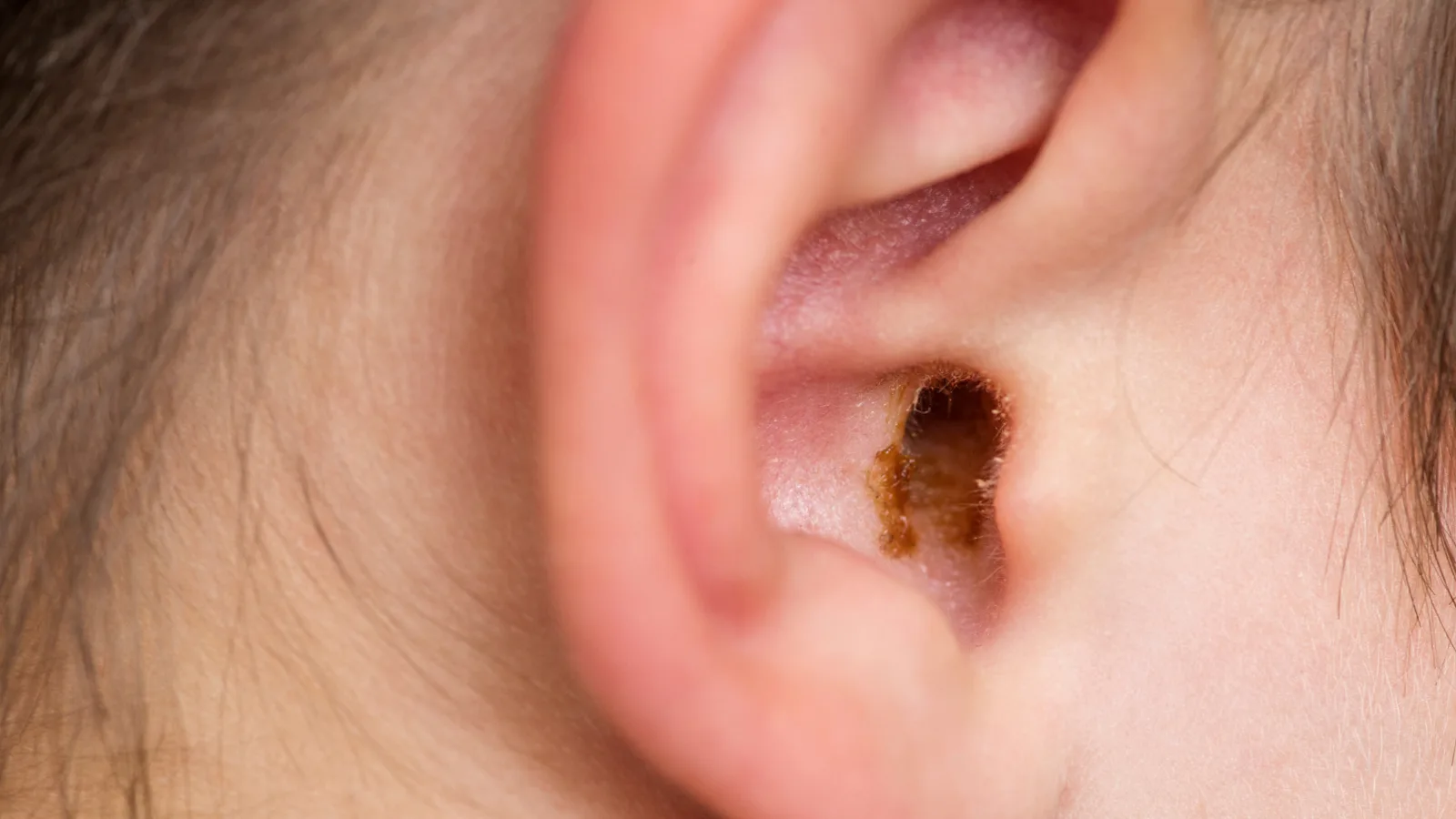
Few habits are as hard to break as the cotton bud after a shower. It feels like cleaning, it takes a second, and there is usually wax on the tip — apparent proof that it was worth doing.
That proof is precisely the problem. What comes out on the tip is the part that was already on its way out. What you cannot see is what was pushed further in.
Earwax is not dirt
Cerumen is produced by the skin of the ear canal itself. It lubricates, maintains the acidity that discourages bacteria and fungi, and traps dust before it reaches the eardrum. A canal with no wax at all is drier and more prone to itching and infection — not healthier.
The ear also has its own way of clearing itself: the skin of the canal grows from the inside out, like a slow conveyor belt, carrying wax to the opening. Showering and jaw movement usually take care of the rest.
What a cotton bud actually does
The ear canal is narrow and the bud is wide. It does remove what sits at the entrance, but it compresses the rest against the eardrum, where the natural mechanism can no longer reach. Over time the build-up hardens into a plug — which is, more often than not, a created problem rather than a found one.
Two less obvious risks come with it:
- Scratching the canal. The skin there is thin, and a graze opens the door to otitis externa, the kind that hurts when the ear is pulled.
- Reaching the eardrum. A single knock is enough to perforate it.
The same logic applies to hairpins, pen caps, keys — and to ear candling, for which no benefit has been demonstrated and burns and canal obstruction by the candle’s own wax have been reported.
Signs of a wax plug
- A blocked ear, on one side, appearing suddenly — often after a shower, when wax swells with water.
- Sudden hearing loss without pain.
- Tinnitus, or your own voice echoing inside your head.
- Itching or a sense of pressure.
None of these symptoms is exclusive to wax. Sudden hearing loss has other causes, some genuinely urgent. “It’s probably just wax” is not a diagnosis to make at home.
What to do instead
For most people the routine is simple: wash the outer ear in the shower, dry it with a towel, and put nothing into the canal.
When a plug has already formed, removal is done in the consulting room under direct view — with a microscope or endoscope, by suction or with an appropriate instrument, depending on the case. It is quick and usually painless. In ears that have been operated on, that have ventilation tubes or a perforated eardrum, this is the only safe method, and home irrigation is contraindicated.
When wax is no longer the point
If the ear stays blocked after removal, or keeps blocking with discharge, wax is probably not the issue. What lies behind the eardrum is worth investigating — the subject of the page on chronic otitis media — or hearing can be checked with audiometry.