
Ear
Ear cleaning at the ENT: when it is needed and how it is done
Most people do not need to clean the ear canal: it cleans itself. Ear cleaning at the ENT is indicated when wax forms a plug or when something favours build-up, such as wearing a hearing aid. It is done in the clinic, with the canal seen up close, and is usually quick.
Written by Profa. Dra. Aline Bittencourt, CRM-MA 7562 Medically reviewed by Profa. Dra. Aline Bittencourt, CRM-MA 7562 Published on
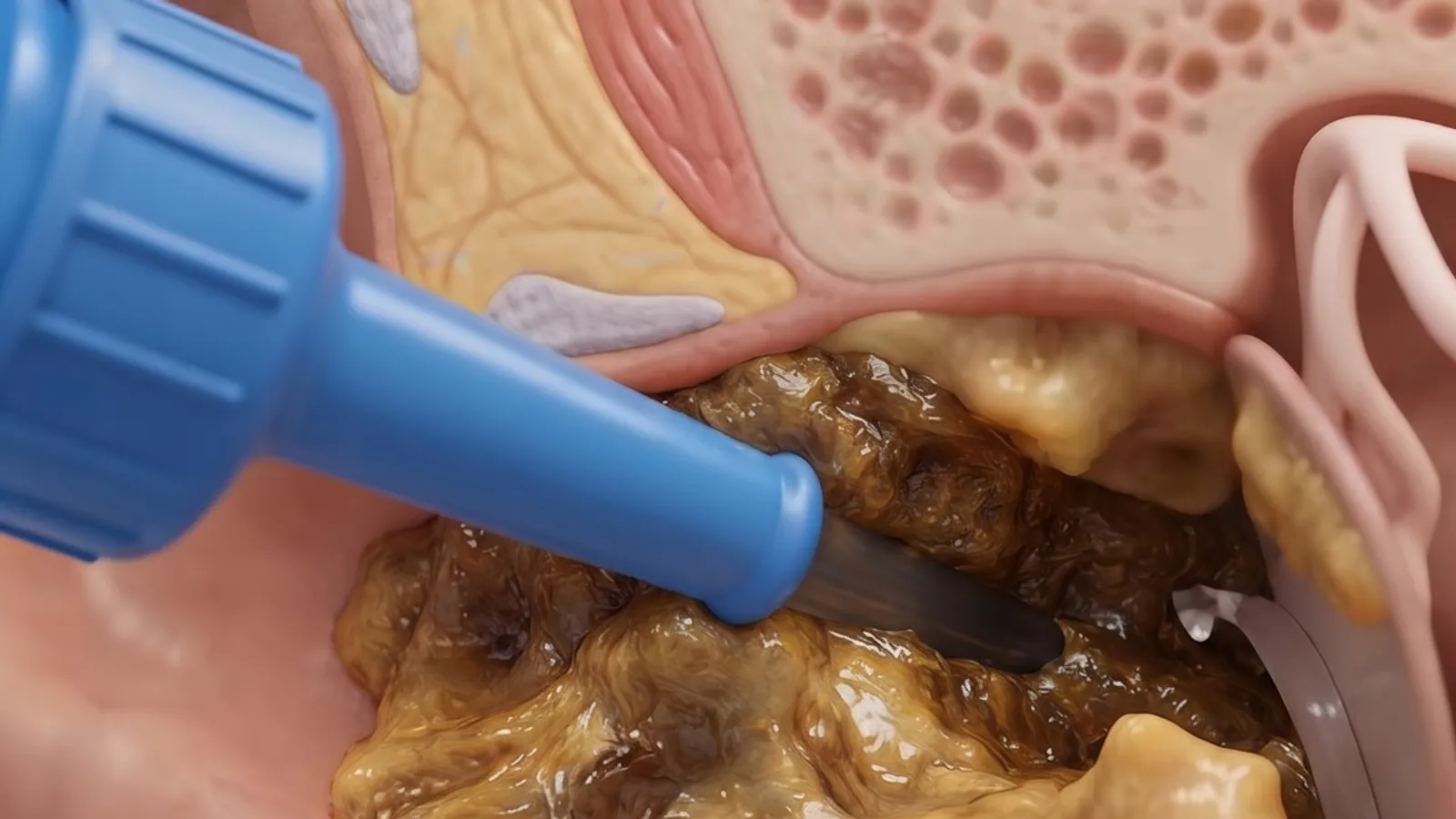
“I need my ears cleaned” is one of the most common requests in an ENT clinic. Sometimes that is exactly the case. Other times the ear is clean and the discomfort has another cause. Knowing the difference avoids both wax plugs and unnecessary cleaning.
Does everyone need to clean their ears?
No. Earwax protects the ear canal, and the ear has its own way of clearing it: the skin of the canal grows from the inside out and carries the wax to the opening. For most people, washing the outer ear in the shower and drying it with a towel is enough.
The cotton-bud habit interferes with this mechanism, which is why it often appears in the history of people who arrive with a blocked ear. The topic is covered in detail in the article on earwax and cotton buds.
When is ear cleaning at the ENT indicated?
- A wax plug causing a blocked ear, reduced hearing, tinnitus or itching.
- Hearing aids or in-ear earphones worn for many hours, which hinder the natural exit of wax.
- A narrow or curved ear canal, which favours build-up.
- Older people, whose wax tends to be drier and harder to clear.
- Before hearing tests, when wax prevents the test from being done properly.
- Operated ears, a perforated eardrum or a ventilation tube, where only cleaning under direct vision is safe.
How is it done in the clinic?
The ENT examines the canal with light and magnification, using a microscope or endoscope, and chooses the technique according to the type of wax and the condition of the ear:
- Suction, with a fine tip that draws out the wax.
- Delicate instruments, to remove firmer wax.
- Irrigation with warm water, in selected cases, when the eardrum is known to be intact.
When the wax is very hard, the doctor may advise drops to soften it for a few days beforehand. The procedure is generally quick and causes little discomfort. At the end, the doctor can see the eardrum and tell whether there is anything beyond the wax.
How often?
There is no fixed interval. People who have never had a plug will probably never need it. People who form plugs often, or wear hearing aids, may need periodic checks, at an interval set case by case.
What not to do
- Cotton buds, hairpins, keys or any object inside the canal.
- Home syringing, which can injure the canal and, if there is an unknown perforation, send water into the middle ear.
- Ear candles, which do not remove wax and can cause burns and leave residue in the canal.
When it is not wax
A blocked ear can also be fluid behind the eardrum, inflammation of the canal or a problem with the Eustachian tube. And sudden hearing loss with no clear cause needs prompt assessment, because some causes have treatment that works better when started early. If cleaning is done and hearing does not return to normal, investigation continues with audiometry.
At Clínica Rhinus, wax removal is done in the clinic, during the visit itself, when indicated.