Nose
Septoplasty recovery: what to expect week by week
Initial recovery from septoplasty usually takes 2 to 4 weeks, and the first 7 days need the most care. A blocked nose, slightly bloody discharge and crusts are expected at first. Frequent nasal irrigation, keeping the head raised and not blowing the nose help healing, and breathing keeps improving over the following weeks.
Written by Profa. Dra. Aline Bittencourt, CRM-MA 7562 Medically reviewed by Profa. Dra. Aline Bittencourt, CRM-MA 7562 Published on
People who have lived with a blocked nose for years often come to surgery expecting to leave hospital breathing freely. After septoplasty the improvement does come, but gradually. Knowing what is expected at each stage avoids worry and helps you look after your nose at home.
What is done during surgery?
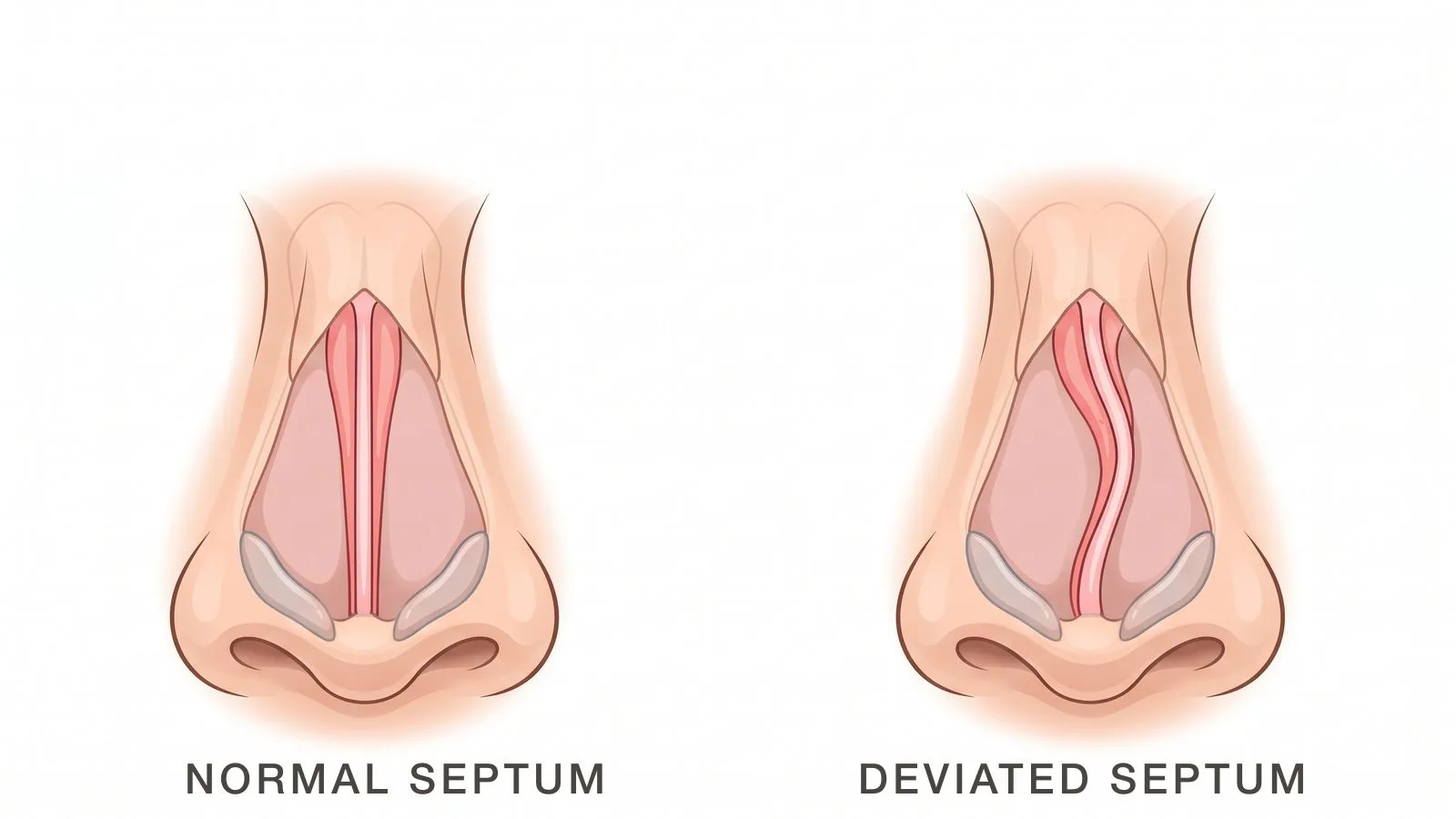
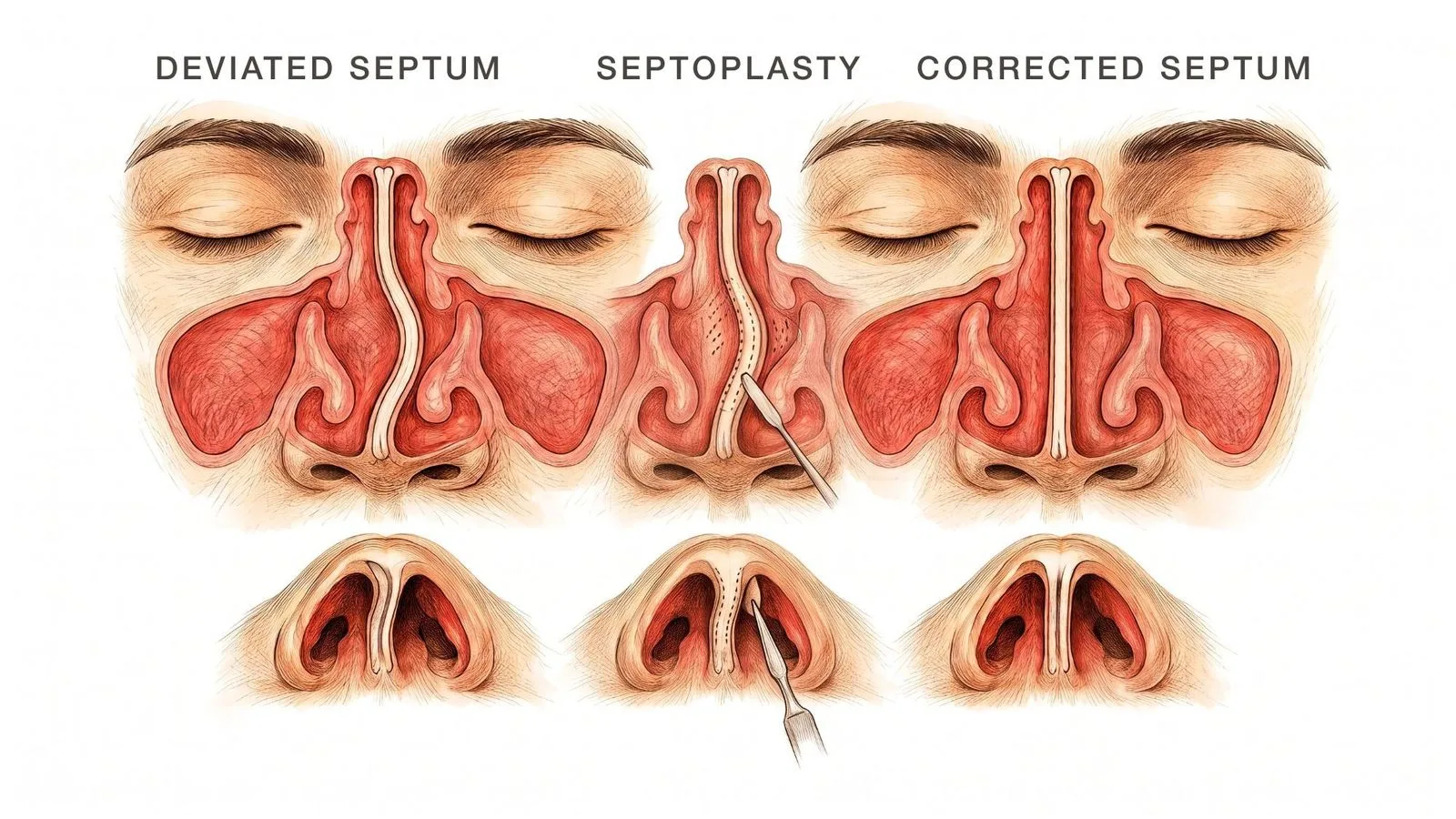
Septoplasty corrects a deviated septum, the wall of bone and cartilage that divides the two nostrils. The surgeon adjusts or removes the deviated parts so the airway is straight. The operation is done through the nostrils, with the help of an endoscope (a thin camera), with no cuts on the skin and no external marks. It is performed in hospital under general anaesthesia and usually takes 1 to 2 hours. In most cases, patients go home the same day or the next.
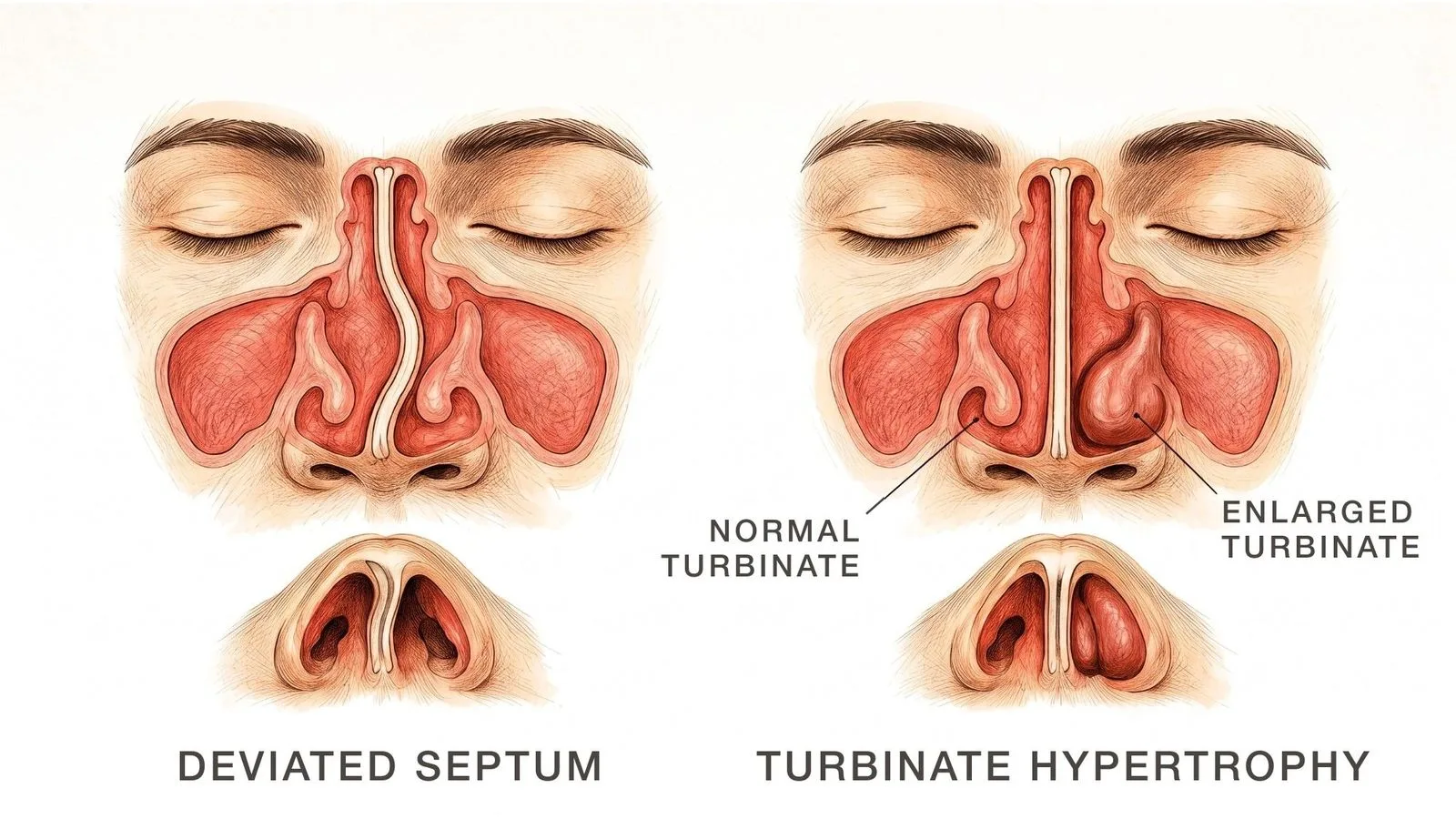
Septoplasty is often combined with reduction of the turbinates, structures inside the nose that filter, warm and humidify the air. When they are enlarged, from rhinitis or chronic irritation, they also obstruct breathing. At Clínica Rhinus, this reduction can be done with coblation, which uses low-temperature radiofrequency and preserves turbinate function.
Indications and diagnosis are covered on the page about deviated septum.
What is expected at each stage?
| Period | What usually happens |
|---|---|
| Days 1 to 3 | Blocked nose, pressure in the face, mild to moderate pain, a little bloody discharge and slight swelling of the nose and upper lip |
| Days 4 to 7 | Nose still blocked, less bleeding, dryness, crusts and numbness of the upper lip and front teeth |
| Weeks 1 to 2 | Gradual improvement in breathing; crusts come out with irrigation, and the blockage may vary through the day |
| Weeks 2 to 4 | Nasal breathing keeps improving; full healing of the lining of the nose can take longer |
The blocked nose of the first days comes from swelling inside the nose and from crusts, not from a failed operation. It eases as the mucosa, the inner lining of the nose, heals.
Splints
In many cases, thin silicone sheets called splints are placed inside the nose to hold the septum in position while it heals. They must not be removed at home: they are taken out at the clinic, at the first follow-up visit, 5 to 7 days after surgery. Many patients feel their breathing ease soon afterwards.
Nasal irrigation
Saline irrigation is the most important part of care at home. It softens and removes crusts and clots, and keeps the nose clean so it can heal.
- In the first week, every 2 hours during the day. There is no need to wake up at night.
- With a high-volume bottle (240 ml), using the whole bottle each time.
- With saline, a home-made solution or a nasal irrigation sachet dissolved in filtered water, always at room temperature.
- After the splints are removed, the interval is adjusted at the visit.
Care in the first weeks
Recommended:
- Sleep with your head raised, on two pillows or with the head of the bed lifted.
- Rest in the first days and stay in cool places.
- Sneeze with your mouth open, so there is no pressure inside the nose.
- Prefer light food that is cold or at room temperature in the first days, and drink plenty of fluids.
- Take medication exactly as prescribed.
Avoid until you are cleared:
- Blowing your nose.
- Physical effort, lifting weights and contact sports.
- Very hot showers, saunas and hot or spicy food, which dilate the blood vessels of the nose and make bleeding more likely.
- Sleeping face down or resting on your nose.
- Smoking.
- Aspirin and anti-inflammatory drugs without medical advice.
When can I return to my activities?
Light activities and work without physical effort are usually resumed during the first or second week, depending on each person’s recovery. Exercise and sport depend on clearance at the follow-up visit. The date is agreed individually.
What are the risks?
Like any operation, septoplasty has risks, which are discussed before the decision. The main ones are bleeding, infection, adhesions inside the nose (synechiae), septal perforation and persistent or recurrent obstruction. Rhinitis, when present, still needs treatment after surgery: septoplasty does not correct it.
After surgery, each patient receives a written guide with care instructions and the signs that call for immediate medical attention.
When does breathing feel good?
Most of the improvement appears between the second and fourth weeks, and it continues over the following weeks as the nose finishes healing. Follow-up visits are used to clean the nose, monitor healing and adjust care.
If a blocked nose is a long-standing complaint, the article on a blocked nose all year explains the most common causes and how they are assessed.