
Ear
Hearing aid or cochlear implant: how that decision is made
Hearing aids and cochlear implants solve different problems. The decision does not rest on the degree of hearing loss alone: it rests on how much a person understands of what they hear, even with sound amplified.
Written by Profa. Dra. Aline Bittencourt, CRM-MA 7562 Medically reviewed by Profa. Dra. Aline Bittencourt, CRM-MA 7562 Published on
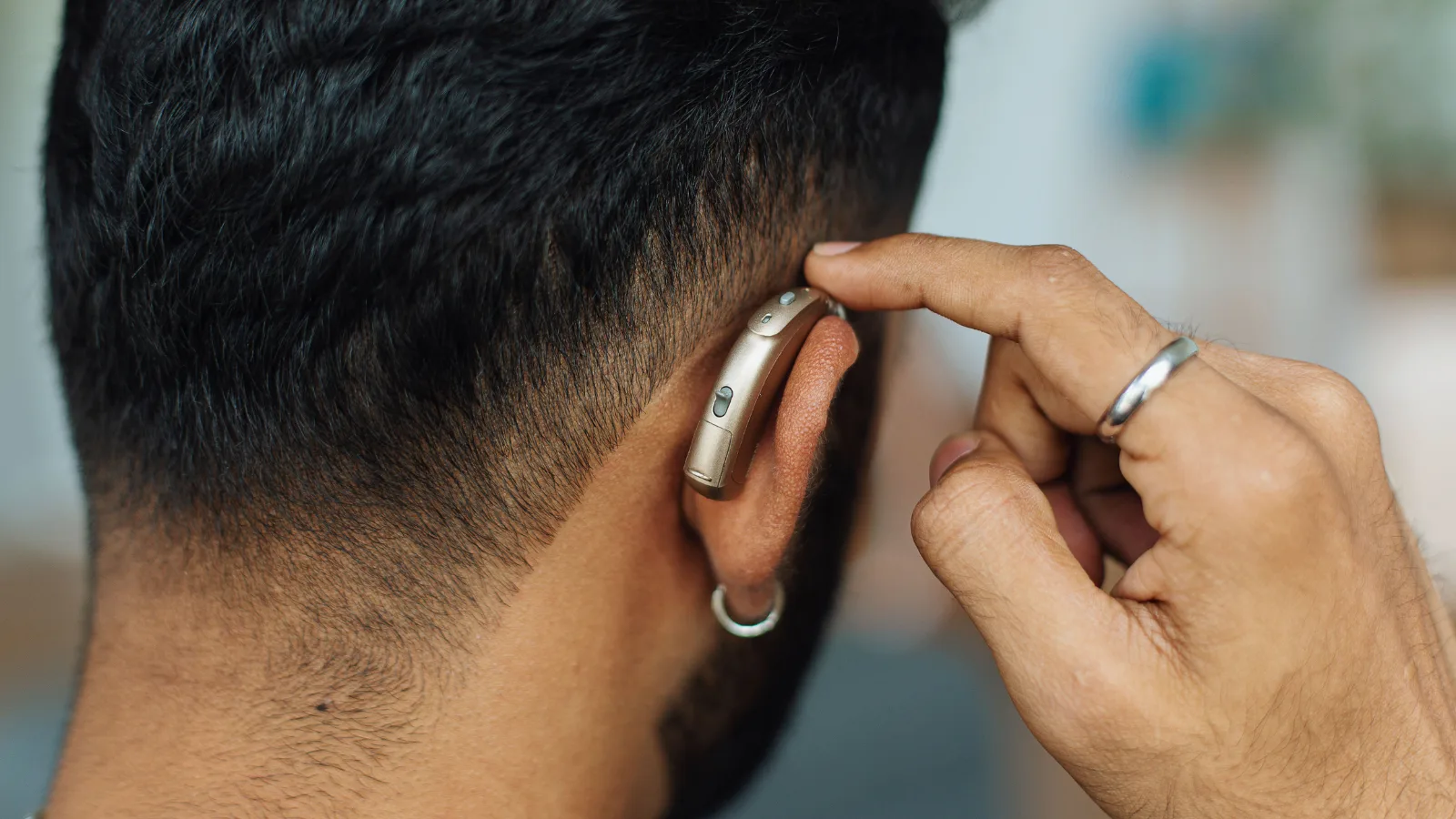
People who receive a diagnosis of significant hearing loss usually arrive at the next appointment with the question already formed: hearing aid or implant?
It is a good question, but it rests on a premise worth correcting. These are not two versions of the same device, one simpler and one more advanced. They address different problems.
What each one does
A hearing aid amplifies sound. It takes what reaches the ear, makes it louder and delivers it back, tuned frequency by frequency. For that to work, there has to be enough working cochlea to make use of the louder sound.
A cochlear implant amplifies nothing. It converts sound into an electrical signal and delivers it straight to the auditory nerve, replacing the step that stopped working. That is why it involves surgery, and why it is considered when amplification is no longer enough.
The image that tends to help: a hearing aid turns up the volume on a radio; an implant is for when turning up the volume no longer helps, because the problem lies in the pick-up.
What weighs in the decision
The degree of hearing loss matters, but on its own it does not decide. What weighs more is how much the person understands of what they hear, even with sound well amplified.
It is common to hear someone say they can hear but not understand: that they catch the voice but not the words, follow one person but get lost in a group, need to see the speaker’s face to keep up. It is that distance between hearing and understanding that the assessment measures.
Among other things, the analysis considers:
- Audiometry results in both ears.
- Speech recognition scores, measured with the hearing aid in use.
- How long the hearing loss has been present and previous experience with amplification.
- Imaging, which shows the anatomy of the cochlea and the nerve.
- Daily routine, work, and what the person needs hearing for.
What does not decide the indication
A few criteria circulate and do not hold up:
- Age on its own. Neither a very young child nor an older adult is excluded by that fact.
- One poor test result. No implant indication rests on a single measurement.
- Having worn a hearing aid only briefly. Experience with well-fitted amplification is usually part of the assessment itself.
When sound cannot take the usual route
There is a third group of situations: ears with malformation, a closed canal or previous surgery that prevents the use of a conventional hearing aid, in which the cochlea still works. That is where bone-anchored hearing implants come in, conducting sound through bone.
How the decision unfolds
The assessment is made by a team — physician and audiologist — and takes more than one appointment. There is no single test that decides, and no decision is made without the person involved or, for children, the family.
The process is set out in detail on the cochlear implant page.
If the question is already on the table, the next step is a consultation with whatever test results you have. Bring them on paper: the conversation moves forward with them on the desk.