
Pediatric hearing
My baby did not pass the newborn hearing screening. What now?
Not passing newborn hearing screening is alarming, but most of the time it does not mean hearing loss. Here is what usually causes a referral result, which tests follow, and why the timeframe matters.
Written by Prof. Aline Bittencourt, MD, PhD, CRM-MA 7562 · RQE 1832 Medically reviewed by Prof. Aline Bittencourt, MD, PhD, CRM-MA 7562 · RQE 1832 Published on
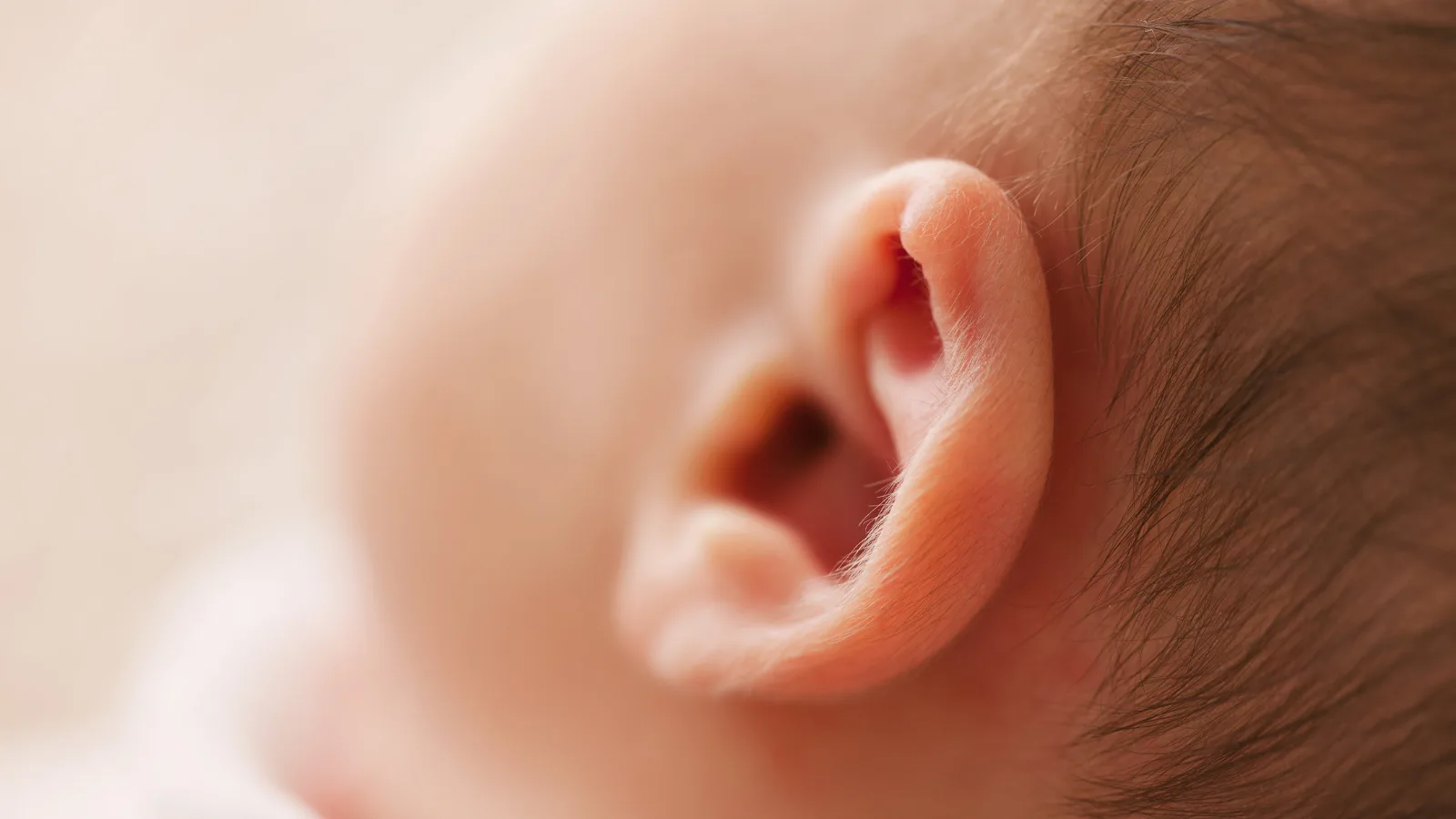
The scene is a common one: the family leaves the maternity unit told that the baby “did not pass” the newborn hearing screening and needs the test repeated. The alarm is immediate, and the first question is always the same: is my child deaf?
Most of the time, no.
Why a healthy baby may not pass
Newborn hearing screening, using the otoacoustic emissions test, captures a very faint sound produced by the cochlea when it is stimulated. Anything that gets in the way of that echo alters the result:
- Residual fluid in the ear, common in the first days of life.
- Vernix or secretion in the ear canal.
- An unsettled baby, crying or feeding during the test.
- Noise in the room where the test was carried out.
None of these has anything to do with the baby’s hearing. They simply prevent the equipment from picking up the response.
What happens next
The usual path has three steps:
- Repeat the screening. This is arranged within 15 days, by which time fluid has usually been reabsorbed. A good proportion of cases resolve here.
- Investigate, if the finding persists. This brings in ABR, which measures the auditory nerve response without requiring cooperation, and tympanometry, which assesses the middle ear.
- Consultation with an ENT specialist, to examine the ear and read all the results together.
Why waiting does not help
If hearing loss is present, time matters. The first years of life are when the brain organises language from what it hears, and beginning intervention within that window changes the course of speech development.
This is not cause for panic, but it is cause for not putting the follow-up off. Repeating a ten-minute test costs little effort; discovering hearing loss at three years of age does not.
What to bring to the follow-up visit
- The result of the screening carried out at the maternity unit.
- The child’s health record, with the history of the birth and any complications.
- Information about any family history of hearing loss.
- The baby fed and, if possible, at the time of day when she usually sleeps.
When to reassess even after passing
Passing newborn hearing screening is good news, but it does not settle the matter for good. Some hearing loss appears later — after infections, after certain medications, or from genetic causes with delayed onset. If speech is delayed, if there are recurrent ear infections, or if the family has any doubt, hearing should be reassessed.
More on this subject on the page about childhood hearing loss.